Thursday, 15 December 2011

Wednesday, 14 December 2011
Peer Review - The Fellowship
This is what Ed and I have commented on The Fellowship's video:
The sequence is clear and concise – it is easily to understand about what is going on. The characterisation is also concise, as we are able to establish the two characters easily as ‘the interrogator’ and ‘the hostage’. Although the plot is easy to understand, the idea does leave questions unanswered, which is a thriller genre convention, the enigma in the narrative.
In terms of mise en scene, they have used minimal costuming, with only Ed having a hood over his head. However, as the school uniform does look like a suit, it does manage to keep in with thriller mise en scene. With props, they have paid attention to thriller convention, Francois carries a rope and they have placed a chair in the interrogation room, both of which follow conventions. In terms of the location, the clip starts in the manor, which looks like a generic building, suiting the frequently urban setting of the thriller genre. The clip later goes into the cellar, which also suits genre conventions as it is dark, and again, very urban and built up. In terms of lighting, the start of the clip uses lighting to silhouette Francois and Ed, using the thriller convention of shadows, and adding a lot of mystery and enigma to the beginning of the clip. However, the rest of the clip does not use many lighting techniques. The acting in the clip, is very good for a preliminary task, with both actors staying in character throughout.
The conventions are generic throughout, due to the recurring mystery and conventions which are visible at all times. The fact that Ed is being dragged through a dingy cellar which has a long corridor is stereotypical to the thriller genre, as it highlights the mystery and shadows, which are conventional. The OSCAR winning acting from Ed and Francois add to the mystery and suspense, creating an atmosphere of mystery.
The sequence is clear and concise – it is easily to understand about what is going on. The characterisation is also concise, as we are able to establish the two characters easily as ‘the interrogator’ and ‘the hostage’. Although the plot is easy to understand, the idea does leave questions unanswered, which is a thriller genre convention, the enigma in the narrative.
In terms of mise en scene, they have used minimal costuming, with only Ed having a hood over his head. However, as the school uniform does look like a suit, it does manage to keep in with thriller mise en scene. With props, they have paid attention to thriller convention, Francois carries a rope and they have placed a chair in the interrogation room, both of which follow conventions. In terms of the location, the clip starts in the manor, which looks like a generic building, suiting the frequently urban setting of the thriller genre. The clip later goes into the cellar, which also suits genre conventions as it is dark, and again, very urban and built up. In terms of lighting, the start of the clip uses lighting to silhouette Francois and Ed, using the thriller convention of shadows, and adding a lot of mystery and enigma to the beginning of the clip. However, the rest of the clip does not use many lighting techniques. The acting in the clip, is very good for a preliminary task, with both actors staying in character throughout.
The conventions are generic throughout, due to the recurring mystery and conventions which are visible at all times. The fact that Ed is being dragged through a dingy cellar which has a long corridor is stereotypical to the thriller genre, as it highlights the mystery and shadows, which are conventional. The OSCAR winning acting from Ed and Francois add to the mystery and suspense, creating an atmosphere of mystery.
Monday, 28 November 2011
Thriller Extracts
The first film we watched an extract from was Cape Fear, in which a released convict stalks and harasses the lawyer who had him sentenced. The extracts which we saw all used mystery, as the camera tended to follow one of the lawyer's family, but showing shots of the antagonist close by. This created a sense of mystery as well as tension as the audience knew that the antagonist was present, but we had to wait to see what his actions would be. The mise en scene used on the antagonist was unusual, with the primary colour of his costume typically being white, a radical choice of colour for the antagonist, but his messy, scruffy costume, as well as the fact that the white made him stand out more against the sober formal outfits of the protagonists family and the people in the courtroom. Also, in the last extract, he was shirtless, a mise en scene choice which was perhaps used to suggest a wildness to his personality. There was an interestingly framed shot in one of the extracts, in which the antagonist approaches the camera, a POV shot from the perspective of the protagonist's daughter. The framing was interesting as the shot was a wide shot, and the antagonist was extremely small in the frame, as well as having lots of extras walking around him. However, the antagonist was placed completely central in the frame, walking down an avenue, and being framed by both the extras and the roadside on either side of him, directly towards the camera, seeming very threatening. Also, hyperbolic sound was used for his footsteps, as they seemed to rise above the rest of the soundtrack. This made the sound of him approaching even more threatening as the sound rose so clearly above everything else, making him the central focus.
The second extract was from What Ever Happened to Baby Jane?, in which an aging and failing actress abuses her sister, a more successful actress, who has since been disabled in a car accident. The extract we watched used a lot of suspense, as we saw Blanche throw the small piece of paper asking for help out into the window, and then saw her sister Jane pick it up. From this point, the audience knows something will happen, and the dialogue scene between the two sisters after, seems to escalate the tension even more as the audience waits for the result of Jane finding the piece of paper, with this long wait contributing to the building of suspense.
Another extract we saw was from the film Fatal Attraction, in which a man's affair goes wrong as his lover grows even more insane and violent towards him. In the extract, we saw Michael Douglas' character walking through a car park, and like with the extract of Cape Fear, saw the antagonist watching the protagonist. This again creates a feeling of tension as the audience can see the antagonist nearby and will make guesses as to what they will do. However, this extract was different in that Michael Douglas' character was unaware of the antagonist being there, creating dramatic irony as the audience knew what would happen. As we then watch Michael Douglas' character walking along to car park, the tension builds, even more so with the car alarm going off as he walks by, as to what the antagonist will have done.
The final extract we saw was from The Silence of the Lambs, in which a rookie FBI agent investigates a number of mutilations. The extract was from one of the final scenes, and like the extracts of Fatal Attraction and Cape Fear, we saw the antagonist Buffalo Bill, watching the protagonist Clarice Starling, as she is unaware of his presence. However, this is done differently as we see it from a POV shot from Buffalo Bill's perspective as Clarice stumbles around in the darkness. This builds a lot of tension as we can see just how close Buffalo Bill is to Clarice, and the audience anticipates something happening even more.
The second extract was from What Ever Happened to Baby Jane?, in which an aging and failing actress abuses her sister, a more successful actress, who has since been disabled in a car accident. The extract we watched used a lot of suspense, as we saw Blanche throw the small piece of paper asking for help out into the window, and then saw her sister Jane pick it up. From this point, the audience knows something will happen, and the dialogue scene between the two sisters after, seems to escalate the tension even more as the audience waits for the result of Jane finding the piece of paper, with this long wait contributing to the building of suspense.
Another extract we saw was from the film Fatal Attraction, in which a man's affair goes wrong as his lover grows even more insane and violent towards him. In the extract, we saw Michael Douglas' character walking through a car park, and like with the extract of Cape Fear, saw the antagonist watching the protagonist. This again creates a feeling of tension as the audience can see the antagonist nearby and will make guesses as to what they will do. However, this extract was different in that Michael Douglas' character was unaware of the antagonist being there, creating dramatic irony as the audience knew what would happen. As we then watch Michael Douglas' character walking along to car park, the tension builds, even more so with the car alarm going off as he walks by, as to what the antagonist will have done.
The final extract we saw was from The Silence of the Lambs, in which a rookie FBI agent investigates a number of mutilations. The extract was from one of the final scenes, and like the extracts of Fatal Attraction and Cape Fear, we saw the antagonist Buffalo Bill, watching the protagonist Clarice Starling, as she is unaware of his presence. However, this is done differently as we see it from a POV shot from Buffalo Bill's perspective as Clarice stumbles around in the darkness. This builds a lot of tension as we can see just how close Buffalo Bill is to Clarice, and the audience anticipates something happening even more.
Wednesday, 23 November 2011
Diary - Creating the Animatic
Making an animatic for the storyboard was interesting and also quite simple to do. To create it, we took photos of all of the frames in the storyboard. We then uploaded the photos onto iMovie, and put them in order to create a rough animation out of them. Then we recorded a commentary by taking it in turns to read what was written on the storyboard about the shot type, sound and content of the shot. We then edited the length of the clips showing each storyboard frame so they fit the commentary properly and preventing the commentary running over multiple frames and becoming confusing. After this, we saved and exported the iMovie clip into Quicktime and uploaded it to the group blog.
The post is in the link below:
http://chrisedjonjack.blogspot.com/2011/11/storyboard-animatic.html
The post is in the link below:
http://chrisedjonjack.blogspot.com/2011/11/storyboard-animatic.html
Wednesday, 9 November 2011
Diary - Writing the Script
Today, I wrote the script for our preliminary task. In order to do this, I followed the typical conventions of film scripts by first writing a slug line to set the scene : "INT. OFFICE - DAY" and also setting the dialogue apart from the descriptions, by adding a space. Normally, the dialogue would be central on the page, which it was in the original word document, but could not be done in a blog post.
The script abides by thriller conventions as it uses enigmas. In particular, the object inside the flight case in never revealed and is kept as a mystery throughout the short. Also, the relationship between the two characters in the script is implied in the script, but never directly stated. Another thriller convention is used in the dialogue as all of the dialogue is kept very short and punchy, which is often used in thriller dialogue.
The script abides by thriller conventions as it uses enigmas. In particular, the object inside the flight case in never revealed and is kept as a mystery throughout the short. Also, the relationship between the two characters in the script is implied in the script, but never directly stated. Another thriller convention is used in the dialogue as all of the dialogue is kept very short and punchy, which is often used in thriller dialogue.
Wednesday, 2 November 2011
Idea Gathering
In today's lesson, I looked at examples of the preliminary exercise from other groups at a different school. This allowed us to see what is expected of us in the task, as well as gain some ideas for how to be creative and unique within the boundaries of the task. It also allowed us to see roughly the level of quality we should be aiming for.
We also has an opportunity to note the other groups' use of the conversation to establish thriller conventions such as the enigma, which is an idea we hope to include. Also, we saw examples of different and creative uses of the match on action in some of the clips, differing from the typical door opening match on action. gain, we hope to include a more interesting use of match on action in our own preliminary task.
However, we also learnt to avoid some problems we found in the other preliminary tasks, such as abiding by the 180 degree rule, as we found other preliminary tasks seemed to accidentally break it. Also, some examples used transitions that seemed out of place, such as a slow fade, as thriller films tend to use quick simple cuts instead.
We also has an opportunity to note the other groups' use of the conversation to establish thriller conventions such as the enigma, which is an idea we hope to include. Also, we saw examples of different and creative uses of the match on action in some of the clips, differing from the typical door opening match on action. gain, we hope to include a more interesting use of match on action in our own preliminary task.
However, we also learnt to avoid some problems we found in the other preliminary tasks, such as abiding by the 180 degree rule, as we found other preliminary tasks seemed to accidentally break it. Also, some examples used transitions that seemed out of place, such as a slow fade, as thriller films tend to use quick simple cuts instead.
Tuesday, 1 November 2011
How does The Shining fit thriller conventions?
Stanley Kubrick's film The Shining is an extremely popular and influential psychological horror/thriller, setting a basis on which many following films in the same genre would seek to emulate. While many people would view The Shining as a horror film, it also contains many conventions frequently found in the thriller genre and particular sub genres, such as supernatural thriller and psychological thriller.
Most of the narrative in The Shining follows the conventions of a psychological thriller. It follows Jack Torrance's slow descent into insanity, which is a key narrative feature of psychological thrillers, which typically focus on a mental conflict rather than physical. Another narrative point used in psychological thriller films, is where the conflict of the protagonist is within himself, rather than from any other external source or antagonist. This is clearly shown in the character development in the character of Jack, who goes from being the almost the sole protagonist at the very beginning of the film to the primary antagonist and main threat to the characters. The character development is also important, as like other psychological thriller films, The Shining mainly focuses on character over plot.
One of the main features of The Shining which ties it to the psychological thriller sub genre is how perception and reality is questioned. This is a very common convention in films that typically deal with one character slowly becoming insane, as it tends to replicate the effects of their oncoming illness. This is a frequently recurring theme in the film, as many of the surreal, paranormal events that happen to the family seem to be some sort of hallucination such as the twin girls who appear to Danny and the recurring scene in which blood pours from the elevators down the corridor. These events, particularly through how surreal they appeal to be, as well as the film's use of very short montages of extremely brief shots of horrific imagery and events, tend to show a slightly unreal side to these events. However, as the film reaches the conclusion, reality is questioned even more with the final shot of Jack Torrance in 1921, which leaves a final confusion with the audience as to the truth. Another narrative point that links The Shining to the thriller sub genre is the use of intelligence or wits to overcome the antagonist or conflict, which is found when Danny loses his father by utilizing the method in which his father is chasing him, and turns it to his advantage, walking backwards through his tracks.
Also, elements of the narrative connect The Shining to the supernatural thriller sub genre, in particular "The Shining" itself, which is a form of telepathy, making it a clear supernatural element. It is also very important to the narrative as a whole, making the supernatural thriller aspect explicit. Also, many of the hallucinations during the film, if not just hallucinations, then would clearly be supernatural events, and as implied by the previous ghost stories told to the family and the fact that the Overlook Hotel is built on a Native American burial ground, these events could possibly be ghosts, and would therefore be supernatural.
The mise en scene of The Shining fits in with the appropriate mise en scene typical of the thriller genre. It takes place in a modern time setting, although does not take place in an urban environment, which slightly goes against thriller conventions, although it is necessary for the character development. The Shining features a lot of modern props, such as the radio and the snowcat, as is typical of the modern setting of thriller films. Also, the lighting of the film corresponds to thriller conventions as the lighting is relatively low key throughout, although it subverts the tendency to use dark environments as the Overlook Hotel is reasonably well lit, although this also helps it avoid the stereotypical horror setting as well.
The sound used in The Shining easily fits into thriller conventions, as it is very suspenseful and is constantly used to build tension and mystery. It is also very hectic, with lots of strings playing at once, creating a confusion and unnerving atmosphere, building the tension and giving the audience the impression that horrific events are about to unfold. Also, the strings are very high pitched, being even more unnerving and building the tension, as the audience expects something to happen as the strings get higher and build the suspense.
The camerawork uses the wide variety of shot types typically found in thriller films and also uses lingering shots with very long durations to set an unnerving mood. These long duration shots break the convention of thriller films using very short shots, but in breaking the convention, allows a more strange and unusual, and in breaking the conventions, unexpected atmosphere to develop from the use of long duration shots.
Overall, The Shining uses many key aspects of it's mise en scene, sound, camerawork and narrative to tie it to the thriller genre and related sub genres in narrative.
Most of the narrative in The Shining follows the conventions of a psychological thriller. It follows Jack Torrance's slow descent into insanity, which is a key narrative feature of psychological thrillers, which typically focus on a mental conflict rather than physical. Another narrative point used in psychological thriller films, is where the conflict of the protagonist is within himself, rather than from any other external source or antagonist. This is clearly shown in the character development in the character of Jack, who goes from being the almost the sole protagonist at the very beginning of the film to the primary antagonist and main threat to the characters. The character development is also important, as like other psychological thriller films, The Shining mainly focuses on character over plot.
One of the main features of The Shining which ties it to the psychological thriller sub genre is how perception and reality is questioned. This is a very common convention in films that typically deal with one character slowly becoming insane, as it tends to replicate the effects of their oncoming illness. This is a frequently recurring theme in the film, as many of the surreal, paranormal events that happen to the family seem to be some sort of hallucination such as the twin girls who appear to Danny and the recurring scene in which blood pours from the elevators down the corridor. These events, particularly through how surreal they appeal to be, as well as the film's use of very short montages of extremely brief shots of horrific imagery and events, tend to show a slightly unreal side to these events. However, as the film reaches the conclusion, reality is questioned even more with the final shot of Jack Torrance in 1921, which leaves a final confusion with the audience as to the truth. Another narrative point that links The Shining to the thriller sub genre is the use of intelligence or wits to overcome the antagonist or conflict, which is found when Danny loses his father by utilizing the method in which his father is chasing him, and turns it to his advantage, walking backwards through his tracks.
Also, elements of the narrative connect The Shining to the supernatural thriller sub genre, in particular "The Shining" itself, which is a form of telepathy, making it a clear supernatural element. It is also very important to the narrative as a whole, making the supernatural thriller aspect explicit. Also, many of the hallucinations during the film, if not just hallucinations, then would clearly be supernatural events, and as implied by the previous ghost stories told to the family and the fact that the Overlook Hotel is built on a Native American burial ground, these events could possibly be ghosts, and would therefore be supernatural.
The mise en scene of The Shining fits in with the appropriate mise en scene typical of the thriller genre. It takes place in a modern time setting, although does not take place in an urban environment, which slightly goes against thriller conventions, although it is necessary for the character development. The Shining features a lot of modern props, such as the radio and the snowcat, as is typical of the modern setting of thriller films. Also, the lighting of the film corresponds to thriller conventions as the lighting is relatively low key throughout, although it subverts the tendency to use dark environments as the Overlook Hotel is reasonably well lit, although this also helps it avoid the stereotypical horror setting as well.
The sound used in The Shining easily fits into thriller conventions, as it is very suspenseful and is constantly used to build tension and mystery. It is also very hectic, with lots of strings playing at once, creating a confusion and unnerving atmosphere, building the tension and giving the audience the impression that horrific events are about to unfold. Also, the strings are very high pitched, being even more unnerving and building the tension, as the audience expects something to happen as the strings get higher and build the suspense.
The camerawork uses the wide variety of shot types typically found in thriller films and also uses lingering shots with very long durations to set an unnerving mood. These long duration shots break the convention of thriller films using very short shots, but in breaking the convention, allows a more strange and unusual, and in breaking the conventions, unexpected atmosphere to develop from the use of long duration shots.
Overall, The Shining uses many key aspects of it's mise en scene, sound, camerawork and narrative to tie it to the thriller genre and related sub genres in narrative.
Friday, 21 October 2011
Making a Group Blog
Today we ( I ) set up the group blog for our blog. Firstly, we thought of calling our group blog "The Chris, Ed, Jon and Jack Blog" but upon seeing another group using the name "The Fellowship" We made a group decision to one up them and go with "The Rebel Alliance" which is a much more superior group name.
The other members of The Rebel Alliance tried to assist with my task, realistically, it can only be done on one computer, so I did all the work.
The other members of The Rebel Alliance tried to assist with my task, realistically, it can only be done on one computer, so I did all the work.
Sunday, 16 October 2011
Thriller Sub-genres
As thriller is such a broad genre, for classification, it is divided into many more specific sub genres, such as:
Conspiracy Thriller
In which the protagonist faces a powerful group of enemies and is typically the only character, or one of very few characters aware of the threat and therefore participating in the conflict.
Crime Thriller
A hybrid of crime and thriller genres that are typically a suspenseful recount of a crime. They typically focus more on the criminal as opposed to the law enforcement and concentrate on action instead of psychological aspects.
Legal Thriller
In which the protagonist, typically a lawyer or attorney has a conflict with antagonists both inside the courtroom and outside. Also, there is frequently a danger to the protagonists lives that separates it from similar genres such as courtroom dramas.
Political Thriller
A thriller in which the conflict falls around a political power struggle. Typically involve giving illegal political power to an antagonist or criminal. Almost always involve national or international politics.
Psychological Thriller
A thriller in which the key conflict is psychological or emotional rather than physical. The protagonist normally stumbles into the conflict by accident and does not start out as one of the main sides to the conflict. Characters normally use more mental means to overcome their enemies, if the enemies are not themselves, as is common in some psychological thrillers.
Supernatural Thriller
In which the conflict typically involves supernatural or paranormal aspects, sometimes as part of the characters' abilities or as part of the setting around them.
 |
| Edge of Darkness |
In which the protagonist faces a powerful group of enemies and is typically the only character, or one of very few characters aware of the threat and therefore participating in the conflict.
 |
| Seven |
Crime Thriller
A hybrid of crime and thriller genres that are typically a suspenseful recount of a crime. They typically focus more on the criminal as opposed to the law enforcement and concentrate on action instead of psychological aspects.
Legal Thriller
 |
| Law Abiding Citizen |
 |
| The Ghost |
A thriller in which the conflict falls around a political power struggle. Typically involve giving illegal political power to an antagonist or criminal. Almost always involve national or international politics.
 |
| Fight Club |
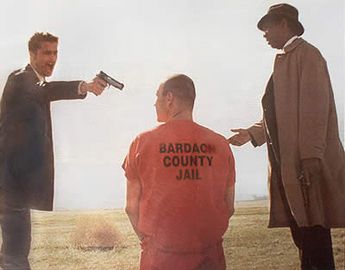
A thriller in which the key conflict is psychological or emotional rather than physical. The protagonist normally stumbles into the conflict by accident and does not start out as one of the main sides to the conflict. Characters normally use more mental means to overcome their enemies, if the enemies are not themselves, as is common in some psychological thrillers.
 |
| Unbreakable |
In which the conflict typically involves supernatural or paranormal aspects, sometimes as part of the characters' abilities or as part of the setting around them.
Thursday, 13 October 2011
Editing Techniques
Match on Action
A match on action is an editing technique which shows an action being completed over multiple shots, typically with the action in the first shot, and the result of the action in the second shot.
An example occurs in this clip of Kill Bill at 1.25 through three shots.
Shot - Reverse Shot
A shot reverse shot is a technique which typically shows a conversation, cutting back and forth between two shots, one of each character, that stays within the 180 degree rule. As the characters are facing in opposite directions in the shots from their perspective, it is assumed by the audience that they are having a conversation
An example of this in Inglourious Basterds starts with the conversation at 0.29.
180 Degree Rule
The 180 degree rule is a rule used for continuity editing that places an imaginary line passing through two characters. The camera is only allowed to stay on that side of the line and crossing the line would be disorientating to the audience. It means that both of the characters stay on one side of the shot, while crossing the line would mean they switch sides.
An example of following the 180 degree rule is in this scene from Death Proof.
Friday, 7 October 2011
Psycho Commentary Reflection
To make our film clip commentary, we first found and watched a clip from our chosen film, Psycho. As we watched it, we made notes on what we saw, particularly on the thriller conventions that we saw, such as the shadow motif. After we had rewatched the clip enough times and made sufficient notes, we added to the notes, making them into full paragraphs. We then downloaded the clip from Youtube, and adding it to iMovie so we could add a commentary. After this, we split the notes into three, and we each read our third by reading and recording a paragraph at a time, and then positioning them to fit better to the content and timings of the clip. However, we did have some difficulty with this as most of what we had to say all occurred very quickly, so we had to reposition some audio to allow the whole commentary to fit. We then uploaded the clip to Blogspot.
Through this exercise, i have acquired a better understanding of how film commentaries and voiceovers work, and how even very short clips can have very large amounts of cinematographical details to analyse. I also learnt how difficult it can be to get a commentary to match up to what is happening on screen. I also noticed how subtle some elements of the cinematography can be in a clip, and how they can only be noticed through repeated viewings or paying attention to very specific details, such as how Lila hits the light as she screams and creates the dynamic lighting found in the rest of the scene, and how subtle some of the motifs can be, so a casual watcher might not consciously be aware of them.
Through this exercise, i have acquired a better understanding of how film commentaries and voiceovers work, and how even very short clips can have very large amounts of cinematographical details to analyse. I also learnt how difficult it can be to get a commentary to match up to what is happening on screen. I also noticed how subtle some elements of the cinematography can be in a clip, and how they can only be noticed through repeated viewings or paying attention to very specific details, such as how Lila hits the light as she screams and creates the dynamic lighting found in the rest of the scene, and how subtle some of the motifs can be, so a casual watcher might not consciously be aware of them.
Sunday, 25 September 2011
Thriller Conventions
The thriller genre is characterised by it's use of tension and suspense, shown through the narrative but also through sound and editing. Of course, a vast majority of films use tension and suspense making thriller one of the more broad genres of film.
The key conventions found in most of thriller films are:
Narrative


 Editing
The key conventions found in most of thriller films are:
Narrative

- Often feature a crime at the heart of the narrative.
- An enigma, for example, in a mystery thriller, the enigma would be the mystery that forms the narrative.
- A complex storyline, using red herrings and cliffhangers.
- Narratives often involving conspiracies, pursuit or investigations.
- The protagonist uses intelligence to solve the mystery or win against the antagonist, as opposed to brute force.
Characters

- A protagonist with a mysterious past that is only alluded to during the film/
- Often a more "anti-hero" style protagonist.
- Antagonist and protagonist on opposite sides of the law.
- Protagonist normally in an authority figure position, as well as one that's slightly more dangerous, such as police officers in Silence of the Lambs and Se7en, or experienced criminals such as in Reservoir Dogs.
- The protagonist will often have a flaw that is exploited by the antagonist, such as John Ferguson's vertigo in Vertigo or Clarice Starling's inexperience.
- A more street-smart and savvy protagonist.
Mise en Scene
- Modern, urban settings.
- Dark environments and low key lighting.
- Use of modern props: mobile phones, computers and cars.
- Weapons such as guns often feature.
Sound
- Suspenseful music, often at key scenes.
- Mostly music suited to the setting and time, such as more modern synthesized music for thrillers such as the Bourne trilogy.
 Editing
- Fast paced editing.
- Quick cuts.
- Obtrusive editing.
- Wide variety of shot types
Sunday, 18 September 2011
Movie Intro Sequence Analysis
http://www.artofthetitle.com/2008/03/17/300/
The title sequence to 300 uses graphics reminiscent of a graphic novel, of which the film 300 is based. This automatically clues the audience as to the style of the film as a whole, and that is more closely follows the graphic novel, as opposed to the original historic event. The images also use a limited colour palette, mainly black for the figures in the foreground, and orange and cream for the background, with uses of red for blood and white for the moon, these colours are also the main colours used during the film itself. The background uses a parchment texture as well, which brings the film's setting to mind along with the graphic novel basis and the colours used almost make the background seem like a watercolour painting, giving it a more artistic feel. The colours are mainly quite dark and this highlights the way in which the film is presented, as it is quite dark and gritty with the content. At the end of the sequence, the background becomes a lot more simplistic towards the end, with just a plain black background, and the blood spatters remaining.
The intro sequence uses a lot of fast camera movements, such as tracks and zooms, to move around the graphics. This creates a more interesting and dynamic feel to the title sequence. Also, when the camera is closest to the figures and they do the most of their movements instead of staying mostly static, it becomes slow motion, which is a stylistic choice used all throughout the film, introducing the audience to it.
Uses of non diegetic sound include a war like drum beat through out, reflecting the battle taking up most of the film's length. It also uses a primal screaming to suggest the brutality of the war, emphasizing the dark nature of the film. There is also a sort of Greek/Middle Eastern string instrument, which alludes to the setting of the film. Also, the sequence lacks a lot of diegetic sound. Normally, the blood splashes and spears hitting people would use a lot more diegetic sound than this sequence does, which seems to prefer to use a quick burst of war like horns whenever a spear hits and no noise at all for the blood, creating a less realistic and more "fantasy" mood for the film. There are some uses of diegetic sound, such as the spears hitting the final person before "300" appears on screen, and the sound of a spear cutting the air as the camera quickly pans past one, but it is still a small amount of use of diegetic sound.
The typography of the titles is very stylistic, using the same colour and appearance as the blood spatter but with a more stylised, graphic novel typography. Also, once they appear, they remain static, placed on the background instead of following the camera. This creates the illusion of the camera moving through a graphic novel, which is supported by the fact that the words are flat and two dimensional, as are the backgrounds.
http://www.artofthetitle.com/2011/09/05/taxi-driver/
The title sequence to Taxi Driver begins with a black background, and the first titles appearing in a simple orange font. This is a very slow opening, in complete contrast to 300's opening, where it almost immediately focuses on the action., and perhaps reflects the general slow approach that the film takes, which the fading in and out of the titles might also suggest. It also puts absolute focus on the titles, making it clear that Robert deNiro is the protagonist and that the film is mainly about his character. There is also a very long delay between the word "in" and the actual name of the film, allowing for the flashier (for the time) main title to appear.
Just before the first shot, a non diegetic drum roll builds up and introduces it, a shot of completely opaque smoke obscuring the screen, introducing the urban environment and the film's more depressing, realistic vision of 1970's New York. Eventually, a slow moving taxi drives through the thick smoke and as it leaves the frame, the title appears behind it, in a more three dimensional version and neon yellow version of the earlier titles' font, in front of more swirling thick smoke. Later titles appear in the same colour, evocative of a New York taxi's famous colour scheme and the font seems to be the same style found on taxi's as well, showing a major part of the film's focus in a more subtle way than the taxi appearing through the smoke.
The non diegetic sound contines as a slow paced jazz song, calming down after the dramatic opening slow drum roll and crescendo of instruments as the taxi appeared. The soundtrack also seems quite melancholic and thoughtful, but not overwhelming so. The use of the jazz genre seems key here, as it uses jazz' associations as being more urban and modern than using classical music would. This sequence, like 300, uses very little diegetic sounds, which seems strange for the realistic style the film seems to be using, but it makes the audience seem quite disconnected from the world, as they hear nothing of it, and for the most part, cannot seem much of it.
The next shot is an extreme close up of Robert deNiro's character's eyes as he looks around, but the audience again feels disconnected as they cannot even see what he is looking at. It also places a focus on that particular character and the sad, tired expression that his eyes seem to show, allowing the audience to see exactly how he feels and his general emotions and attitude from a single shot. Also the cuts between each shot are very slow fades, which go with the emotions of Robert deNiro's character and the slow fades of the titles and the slow music and give the opening sequence a slow and tiring effect, placing the audience in this character's place.
The non diegetic sound also changes to a different jazz song, as slow paced as the last, but seeming slightly more romantic, which coupled with the blurry shots of New York and it's bright neon lights from the inside of the taxi, seem to suggest a sad romance with the city. Also, these slowed down blurry POV shots further emphasise the disconnection to the outside world, and reveal that it's Robert deNiro's character who feels this disconnection.
The opening title sequence for Limitless seems quite simplistic, but is very effective and suits the film. On watching, it seems like one entirely long shot, which constantly seems to be zooming in. This gives a very mind bending and surreal effect and becomes very mesmerising as the camera constantly moves along one street in New York. This effect also introduces the key part of the film, where the main character becomes more intelligent and as a result, a lot more aware of everything in his surroundings. This allows the audience to experience how he feels when he appears just before the title sequence. The very start of the shot, the camera is sideways, while the main title and the street itself appear vertical on the shot. The camera then rotates as it zooms forward to become level with the street. Towards the middle of the sequence, it zooms into an electronic billboard and starts zooming through an orange visualisation of a brain until one part of it turns into a satellite image of Manhattan before zooming into a building and whiting out.
The typography of the titles is much more simple in Limitless, with a simple sans serif font and a pale yellow colour. They also have a simple placement on the frame, just appearing at the bottom of the screen, instead of 300's more inventive placement and Taxi Driver's titles which appear around the screen. This makes the titles a lot more conventional, balancing out the outlandish zooming effect, as a more creative way of showing titles may distract from the effect.
The sequence uses a very repetitive non diegetic soundtrack, mainly being synthesized, which shows the modernity of the film. The soundtrack also uses a lot of different instruments and sounds, which adds to the sequence's disorientating effect. This sequence also uses a lot of diegetic sound, mostly people talking and cars driving around as the camera zooms past them, adding more to the effect of being a lot more aware of surroundings.
The title sequence to 300 uses graphics reminiscent of a graphic novel, of which the film 300 is based. This automatically clues the audience as to the style of the film as a whole, and that is more closely follows the graphic novel, as opposed to the original historic event. The images also use a limited colour palette, mainly black for the figures in the foreground, and orange and cream for the background, with uses of red for blood and white for the moon, these colours are also the main colours used during the film itself. The background uses a parchment texture as well, which brings the film's setting to mind along with the graphic novel basis and the colours used almost make the background seem like a watercolour painting, giving it a more artistic feel. The colours are mainly quite dark and this highlights the way in which the film is presented, as it is quite dark and gritty with the content. At the end of the sequence, the background becomes a lot more simplistic towards the end, with just a plain black background, and the blood spatters remaining.
The intro sequence uses a lot of fast camera movements, such as tracks and zooms, to move around the graphics. This creates a more interesting and dynamic feel to the title sequence. Also, when the camera is closest to the figures and they do the most of their movements instead of staying mostly static, it becomes slow motion, which is a stylistic choice used all throughout the film, introducing the audience to it.
Uses of non diegetic sound include a war like drum beat through out, reflecting the battle taking up most of the film's length. It also uses a primal screaming to suggest the brutality of the war, emphasizing the dark nature of the film. There is also a sort of Greek/Middle Eastern string instrument, which alludes to the setting of the film. Also, the sequence lacks a lot of diegetic sound. Normally, the blood splashes and spears hitting people would use a lot more diegetic sound than this sequence does, which seems to prefer to use a quick burst of war like horns whenever a spear hits and no noise at all for the blood, creating a less realistic and more "fantasy" mood for the film. There are some uses of diegetic sound, such as the spears hitting the final person before "300" appears on screen, and the sound of a spear cutting the air as the camera quickly pans past one, but it is still a small amount of use of diegetic sound.
The typography of the titles is very stylistic, using the same colour and appearance as the blood spatter but with a more stylised, graphic novel typography. Also, once they appear, they remain static, placed on the background instead of following the camera. This creates the illusion of the camera moving through a graphic novel, which is supported by the fact that the words are flat and two dimensional, as are the backgrounds.
http://www.artofthetitle.com/2011/09/05/taxi-driver/
The title sequence to Taxi Driver begins with a black background, and the first titles appearing in a simple orange font. This is a very slow opening, in complete contrast to 300's opening, where it almost immediately focuses on the action., and perhaps reflects the general slow approach that the film takes, which the fading in and out of the titles might also suggest. It also puts absolute focus on the titles, making it clear that Robert deNiro is the protagonist and that the film is mainly about his character. There is also a very long delay between the word "in" and the actual name of the film, allowing for the flashier (for the time) main title to appear.
Just before the first shot, a non diegetic drum roll builds up and introduces it, a shot of completely opaque smoke obscuring the screen, introducing the urban environment and the film's more depressing, realistic vision of 1970's New York. Eventually, a slow moving taxi drives through the thick smoke and as it leaves the frame, the title appears behind it, in a more three dimensional version and neon yellow version of the earlier titles' font, in front of more swirling thick smoke. Later titles appear in the same colour, evocative of a New York taxi's famous colour scheme and the font seems to be the same style found on taxi's as well, showing a major part of the film's focus in a more subtle way than the taxi appearing through the smoke.
The non diegetic sound contines as a slow paced jazz song, calming down after the dramatic opening slow drum roll and crescendo of instruments as the taxi appeared. The soundtrack also seems quite melancholic and thoughtful, but not overwhelming so. The use of the jazz genre seems key here, as it uses jazz' associations as being more urban and modern than using classical music would. This sequence, like 300, uses very little diegetic sounds, which seems strange for the realistic style the film seems to be using, but it makes the audience seem quite disconnected from the world, as they hear nothing of it, and for the most part, cannot seem much of it.
The next shot is an extreme close up of Robert deNiro's character's eyes as he looks around, but the audience again feels disconnected as they cannot even see what he is looking at. It also places a focus on that particular character and the sad, tired expression that his eyes seem to show, allowing the audience to see exactly how he feels and his general emotions and attitude from a single shot. Also the cuts between each shot are very slow fades, which go with the emotions of Robert deNiro's character and the slow fades of the titles and the slow music and give the opening sequence a slow and tiring effect, placing the audience in this character's place.
The non diegetic sound also changes to a different jazz song, as slow paced as the last, but seeming slightly more romantic, which coupled with the blurry shots of New York and it's bright neon lights from the inside of the taxi, seem to suggest a sad romance with the city. Also, these slowed down blurry POV shots further emphasise the disconnection to the outside world, and reveal that it's Robert deNiro's character who feels this disconnection.
The opening title sequence for Limitless seems quite simplistic, but is very effective and suits the film. On watching, it seems like one entirely long shot, which constantly seems to be zooming in. This gives a very mind bending and surreal effect and becomes very mesmerising as the camera constantly moves along one street in New York. This effect also introduces the key part of the film, where the main character becomes more intelligent and as a result, a lot more aware of everything in his surroundings. This allows the audience to experience how he feels when he appears just before the title sequence. The very start of the shot, the camera is sideways, while the main title and the street itself appear vertical on the shot. The camera then rotates as it zooms forward to become level with the street. Towards the middle of the sequence, it zooms into an electronic billboard and starts zooming through an orange visualisation of a brain until one part of it turns into a satellite image of Manhattan before zooming into a building and whiting out.
The typography of the titles is much more simple in Limitless, with a simple sans serif font and a pale yellow colour. They also have a simple placement on the frame, just appearing at the bottom of the screen, instead of 300's more inventive placement and Taxi Driver's titles which appear around the screen. This makes the titles a lot more conventional, balancing out the outlandish zooming effect, as a more creative way of showing titles may distract from the effect.
The sequence uses a very repetitive non diegetic soundtrack, mainly being synthesized, which shows the modernity of the film. The soundtrack also uses a lot of different instruments and sounds, which adds to the sequence's disorientating effect. This sequence also uses a lot of diegetic sound, mostly people talking and cars driving around as the camera zooms past them, adding more to the effect of being a lot more aware of surroundings.

Subscribe to:
Comments (Atom)